Tag: Civic Type R Comparison

  • 2026 Acura Integra Type S: Is It Worth the Premium?

    2026 Acura Integra Type S: Is It Worth the Premium?

    A performance and ownership guide covering price, speed, manual transmission, daily usability, track hardware, and Civic Type R comparisons

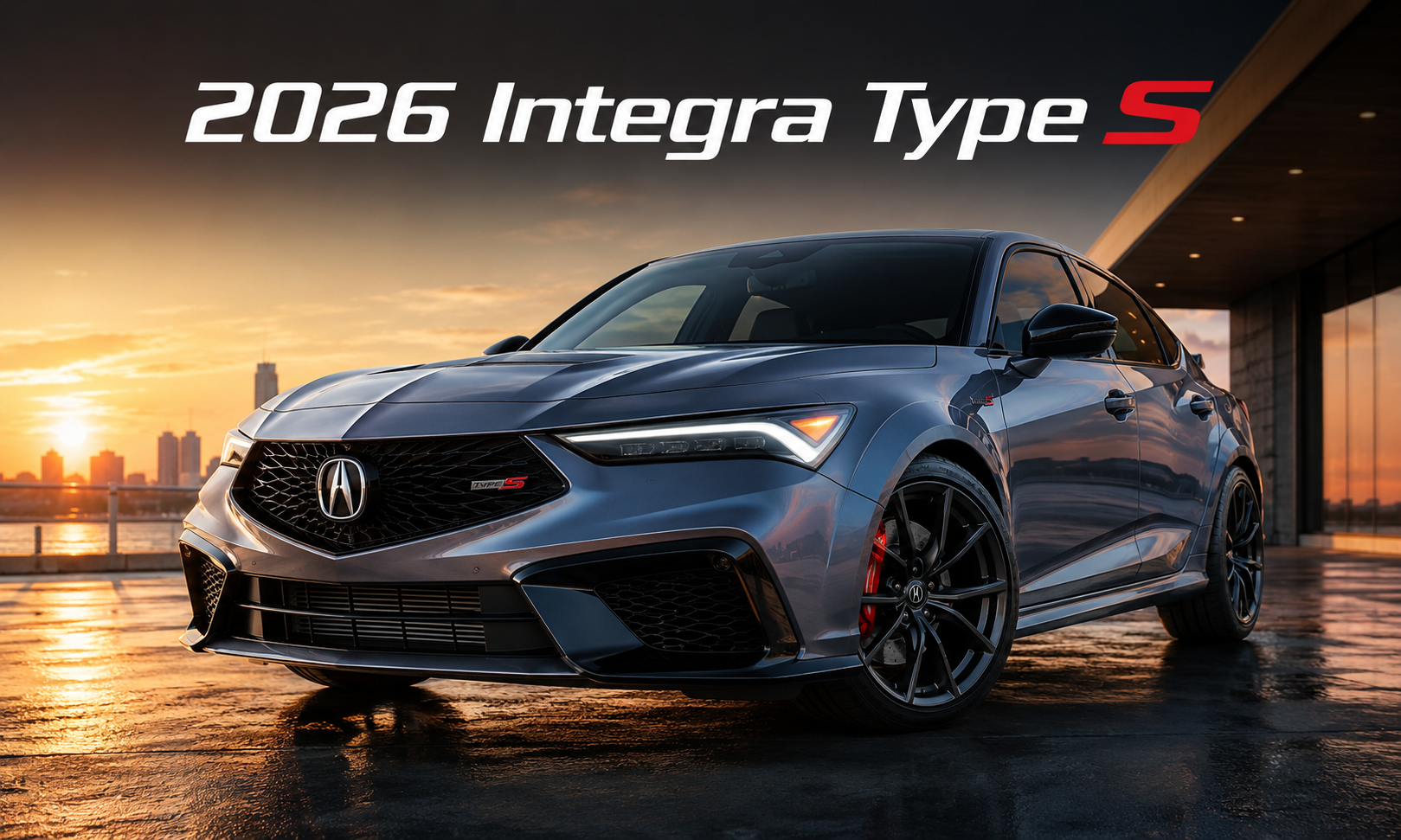
    The 2026 Integra Type S is one of the rare new performance cars built around a simple enthusiast formula: a 320-horsepower turbocharged engine, front-wheel drive, a limited-slip differential, and a six-speed manual transmission. It starts at $53,900 before destination, or $55,195 with Acura’s current $1,295 destination charge included.

    The difficult question is not whether the Integra Type S is fun. It is whether the Acura upgrades are worth paying more than the closely related Honda Civic Type R. The Type S offers a more discreet shape, a calmer suspension setting, heated front seats, a head-up display, premium audio, and hatchback practicality. It also lacks an automatic transmission, all-wheel drive, rear climate vents, and the richly finished cabin some buyers expect at nearly $55,000.

    Key Takeaways

    The 2026 Integra Type S starts at $53,900 before destination and $55,195 with destination included.

    Its 2.0-liter turbocharged four-cylinder produces 320 horsepower and 310 lb-ft of torque.

    Every Type S is front-wheel drive and uses a close-ratio six-speed manual transmission.

    Car and Driver recorded a 5.1-second 0-to-60-mph time, 1.02 g of skidpad grip, and a 153-foot stop from 70 mph.

    The 24-cubic-foot hatchback cargo area makes it unusually practical for a serious performance car.

    The strongest reasons to pay extra over a Civic Type R are comfort, subtle styling, audio, warranty coverage, and daily usability.

    What Changed for the 2026 Integra Type S?

    The mechanical package carries over. Acura did not change the engine output, transmission, suspension architecture, brakes, wheels, or basic interior layout. Double Apex Blue Pearl joins the Type S color choices for 2026, and Acura continues to offer appearance accessories such as forged wheels, spoilers, and exterior trim.

    A carryover year is not necessarily a disadvantage. The Type S arrived for 2024 with a well-developed platform, and the lack of major changes means buyers are purchasing a known combination rather than an untested redesign. It also makes lightly used 2024 and 2025 cars worth comparing because the performance difference is essentially nonexistent.

    How Much Does the 2026 Integra Type S Cost?

    Cost Item Amount What It Means
    Base MSRP $53,900 Vehicle price before destination, tax, registration, and options
    Destination charge $1,295 Raises the starting delivered price to $55,195
    Premium paint Typically about $600 Applies to selected exterior colors
    Accessory wheels Can exceed $2,000 Dealer-installed forged wheel packages can lift the total quickly
    Likely out-the-door total Often above $59,000 Varies by state tax, fees, accessories, and dealer pricing

    The standard car already includes the important performance hardware, so buyers do not need to add a track package to unlock its ability. Optional carbon-fiber trim, spoilers, wheels, paint, and protection products are mainly visual or ownership choices. Request a written out-the-door quote before visiting a dealer because accessories and market adjustments can change the transaction more than the factory MSRP.

    Current equipment, pricing, warranty, and specifications can be confirmed on Acura’s official 2026 Integra specifications page.

    What Makes the Type S More Than a Regular Integra?

    The ordinary Integra uses a 200-horsepower 1.5-liter turbo engine. The Type S receives a much stronger 2.0-liter turbo engine, a helical limited-slip differential, dual-axis front struts, larger stabilizer bars, adaptive dampers, wider bodywork, 19-inch wheels, 265-section summer tires, an active exhaust, and Brembo four-piston front brake calipers.

    Performance Area Type S Hardware Why It Matters
    Engine 320-hp 2.0-liter turbo four-cylinder Strong midrange torque and sustained pull to the 7,000-rpm redline
    Transmission Close-ratio six-speed manual Precise control with automatic rev matching
    Front axle Helical limited-slip differential Helps the front tires share power when accelerating out of corners
    Suspension Dual-axis front struts and adaptive dampers Reduces torque steer and changes ride firmness by drive mode
    Brakes and tires 13.8-inch front discs with Brembo calipers; 265/30ZR19 summer tires Strong stopping power and high grip, with added replacement cost and winter limits

    How Fast Is the 2026 Integra Type S?

    The Type S is quick, but traction determines the launch. All 320 horsepower reaches the pavement through the front tires, so too much throttle can create wheelspin while too little can bog the engine. Once moving, the broad torque curve makes the car feel stronger than the 0-to-60 number alone suggests.

    Test or Specification Result
    0 to 60 mph 5.1 seconds
    Quarter-mile 13.7 seconds at 105 mph
    Manufacturer-claimed top speed 167 mph
    70 to 0 mph braking 153 feet
    Skidpad grip 1.02 g
    Curb weight 3,219 pounds

    The numbers are only part of the appeal. The steering is quick, the front differential pulls the car toward corner exits, and the shifter makes ordinary speeds engaging. Unlike many all-wheel-drive rivals, the Acura requires the driver to manage traction and choose every gear. That makes it slower in imperfect launches but more interactive during normal driving.

    Is the Manual Transmission Easy to Live With?

    Yes, provided the buyer actually wants a manual. The clutch engagement is progressive, the shifter is light and precise, and automatic rev matching smooths downshifts. The engine produces its full 310 lb-ft of torque from 2,600 to 4,000 rpm, so the car does not demand constant shifting in traffic.

    There is no automatic alternative. That protects the Type S character but excludes shoppers who share the car with a non-manual driver, commute in severe congestion, or need adaptive cruise control with low-speed follow. The manual also means launch performance depends more heavily on driver skill and tire condition.

    Can the Integra Type S Be a Comfortable Daily Driver?

    This is where the Acura separates itself from many track-focused cars. Comfort mode softens the adaptive dampers, the front seats are heated, the hatch opens to a large cargo area, and visibility is good. The car can carry four people rather than five because the rear center seating position is replaced by a small console.

    Daily-Use Feature What Owners Get
    Cargo and seating 24 cubic feet of cargo space and seating for four passengers
    Displays and connectivity 9.0-inch touchscreen, 10.2-inch digital cluster, head-up display, wireless phone integration, and 16-speaker ELS Studio 3D audio
    Drive modes and fuel Comfort, Sport, Sport+, and Individual modes; 12.4-gallon tank

    The compromises are noticeable. Road noise is prominent on coarse pavement, the ride can remain busy even in Comfort mode, and the low-profile summer tires are vulnerable to potholes. Rear passengers do not receive dedicated air vents or heated seats, and the 4.0-inch ground clearance requires care around steep driveways and parking curbs.

    Does the Interior Feel Premium Enough for the Price?

    The Type S cabin is functional and well equipped rather than lavish. Perforated Ultrasuede-trimmed front seats, metal pedals, a leather and aluminum shift knob, a head-up display, wireless charging, and the ELS audio system add an Acura identity. The controls are intuitive, the screen responds quickly, and the seating position works well for performance driving.

    However, much of the architecture is shared with the Honda Civic. Some plastics, switchgear, storage areas, and rear-seat features do not feel substantially different from a mainstream compact. Buyers moving from an Audi S3 or BMW performance model may find the materials plain, even if they prefer the Acura’s simpler controls and superior hatchback practicality.

    What Fuel Economy and Running Costs Should Owners Expect?

    The EPA rates the Type S at 21 mpg city, 28 mpg highway, and 24 mpg combined. Car and Driver achieved 31 mpg on its 75-mph highway test, showing that the car can be reasonably efficient during steady cruising. Acura recommends 93-octane premium fuel for the Type S.

    Ownership Area Cost Consideration
    Fuel Premium gasoline and enthusiastic driving can raise annual expense
    Tires Wide 19-inch summer tires are costly and unsuitable for freezing weather
    Winter use Cold-climate drivers should budget for a separate winter wheel and tire set
    Brakes Large performance pads and rotors can cost more than ordinary Integra parts
    Insurance A 320-hp performance model can attract higher premiums
    Maintenance One year or 12,000 miles of scheduled maintenance is included

    Acura provides a four-year or 50,000-mile limited warranty and a six-year or 70,000-mile powertrain warranty. A recent 40,000-mile long-term test of an earlier Type S reported low routine service spending and no repair cost, which is encouraging, although one vehicle cannot predict every owner’s experience.

    The full ownership experience is explored in Car and Driver’s 40,000-mile Integra Type S long-term test, which also highlights the car’s road noise, affordable servicing, winter usability with proper tires, and lasting driver appeal.

    Is the Integra Type S Better Than the Civic Type R?

    Decision Point Integra Type S Civic Type R
    Starting price with destination $55,195 $48,090
    Horsepower 320 hp 315 hp
    Ride and daily comfort Softer and more mature Firmer and more track focused
    Exterior personality Subtle wide-body liftback More obvious performance styling and large rear wing
    Cabin extras Heated seats, head-up display, ELS audio More aggressive front seats and track-focused presentation
    Best match One-car owners wanting performance with discretion Drivers prioritizing track focus and value

    The Type R is the stronger value when both cars are available at sticker price. It is slightly quicker in some testing, costs more than $7,000 less including destination, and delivers a more focused chassis experience. The Type S justifies its premium for buyers who prefer its styling, easier ride, heated seats, stronger audio system, head-up display, longer powertrain warranty, and more restrained image.

    Dealer pricing can reverse the calculation. Civic Type R markups have historically affected availability in some markets, while an Integra Type S discount or favorable financing can narrow the real transaction gap. Compare written out-the-door prices rather than MSRP alone.

    Should You Buy a New 2026 Model or a Used Type S?

    A new 2026 model provides the full warranty, the latest color choices, and a known ownership history. A lightly used 2024 or 2025 Type S can deliver the same engine, transmission, braking, suspension, technology, and performance for less money.

    • Check for open recalls and confirm all software or steering-related campaigns are complete.
    • Inspect the front tires for wheelspin wear and the outer shoulders for aggressive cornering use.
    • Look for bent wheels, damaged sidewalls, brake vibration, and underbody contact.
    • Test the clutch engagement, shifter action, rev matching, adaptive dampers, exhaust modes, and infotainment system.
    • Ask about track use, modifications, ECU tuning, aftermarket intake or exhaust parts, and remaining warranty coverage.
    • Arrange an independent inspection before purchasing a modified or heavily used example.

    Who Should Buy the 2026 Integra Type S?

    The Type S is best for a driver who wants one car to handle commuting, weekend trips, back roads, and occasional track days. It combines the involvement of a manual sports car with rear-seat access and a genuinely useful hatch. It also suits buyers who like the Civic Type R formula but want a more understated design and more comfort equipment.

    It is a poor match for anyone who needs an automatic, all-wheel drive, quiet luxury-car isolation, five-passenger seating, or low-cost replacement tires. Buyers focused mainly on acceleration may also prefer an all-wheel-drive Audi S3, Volkswagen Golf R, or BMW M235, which can launch harder and offer automatic transmissions.

    Frequently Asked Questions

    How much is the 2026 Acura Integra Type S?

    It starts at $53,900 before destination, or $55,195 including the current $1,295 destination charge.

    How much horsepower does the Integra Type S have?

    Its turbocharged 2.0-liter four-cylinder produces 320 horsepower and 310 lb-ft of torque.

    Does the 2026 Type S offer an automatic transmission?

    No. Every Integra Type S uses a six-speed manual transmission.

    Is the Integra Type S all-wheel drive?

    No. It is front-wheel drive with a helical limited-slip differential.

    How fast is the Integra Type S?

    Car and Driver recorded a 5.1-second 0-to-60-mph time and a 13.7-second quarter-mile.

    Can the Integra Type S be driven in winter?

    Yes, but its standard summer tires should be replaced with proper winter or all-season performance tires when temperatures drop.

    Is the Type S worth more than the Civic Type R?

    It can be for buyers who value comfort, subtle styling, heated seats, premium audio, a head-up display, and the Acura warranty. The Type R remains the stronger track-value choice.

    The Bottom Line

    The 2026 Acura Integra Type S succeeds because it does not force buyers to choose between a serious driver’s car and a practical daily vehicle. Its engine, manual transmission, differential, adaptive dampers, Brembo brakes, and wide summer tires create genuine track capability, while the hatchback body and Comfort mode make everyday use realistic.

    Its price is the central weakness. The Civic Type R delivers a closely related experience for much less at MSRP, and some European rivals offer all-wheel drive or more upscale cabins. For the buyer who wants a manual-only performance car with mature styling, strong utility, and enough comfort to serve as the only vehicle, the Integra Type S remains one of the most complete choices in the U.S. market.