
 By
By 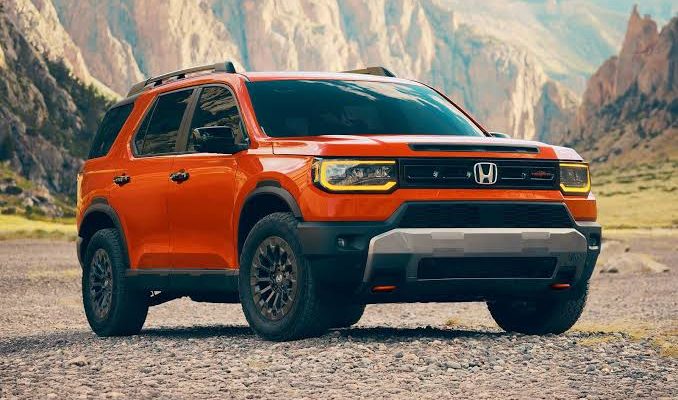
The redesigned Passport looks promising, but long-term reliability cannot be proven yet. Here is what the powertrain history, recalls, early owner reports, warranty, and current testing actually tell buyers.
Evaluating 2026 Honda Passport Reliability is difficult because the vehicle is both familiar and new. Honda kept a naturally aspirated 3.5-liter V6, but the Passport moved to a newer double-overhead-cam version of that engine, a Honda-built 10-speed automatic, a new platform shared with the Pilot, a more advanced all-wheel-drive system, and much more electronic hardware.
That means two common claims can both be misleading. Calling the 2026 Passport “proven Honda reliability” ignores the fact that this is the first model year of a major redesign. Calling it an “unproven first-year vehicle” also goes too far because important parts of its architecture and powertrain have already been used in the current-generation Pilot.
The best 2026 answer is therefore conditional: the Passport looks promising rather than proven. Honda’s current Passport specifications confirm the 285-hp V6, second-generation i-VTM4 all-wheel drive, 10-speed automatic, and one-year/12,000-mile Honda Maintenance Program. Long-term durability data, however, will take years to accumulate.
| KEY TAKEAWAYS
· The 2026 Passport is a full redesign, so no credible source can yet prove 100,000-mile or 10-year reliability. · Its 285-hp 3.5-liter DOHC V6 and 10-speed automatic are closely related to powertrain hardware already used in the current Honda Pilot, which reduces some first-year uncertainty. · A verified 2026 safety recall, NHTSA campaign 26V424000, covers certain Passport and Pilot vehicles with rear subframe bolts that may have been tightened improperly. · Early owner reports include transmission shift complaints, rattles, infotainment disconnects, and isolated steering or electrical repairs, but these reports do not establish a model-wide failure rate. · Car and Driver’s long-term 2026 Passport TrailSport had reached roughly 3,300 miles with solid reliability at the time of its early update, but the 40,000-mile test was still underway. · Honda provides a 3-year/36,000-mile new-vehicle warranty, a 5-year/60,000-mile powertrain warranty, roadside assistance during the basic warranty term, and scheduled maintenance for 1 year/12,000 miles. |
Reliability Scorecard: Known, Shared, and Still Unknown
| Area | 2026 Confidence | Why |
| Engine architecture | Partly proven | Same 285-hp DOHC V6 architecture introduced on the current Pilot, but long-term Passport-specific data are limited. |
| 10-speed automatic | Partly proven | Honda calls it a second-generation 10-speed; the transmission family has current Pilot experience, but some Passport owners report low-speed shift quality concerns. |
| AWD system | Encouraging | Second-generation i-VTM4 builds on Honda’s established torque-vectoring AWD concept. |
| Chassis/body | New for Passport | Stiffer fourth-generation structure means long-term squeak, rattle, corrosion, and suspension durability are still developing data points. |
| Electronics/infotainment | Too early | More screens, cameras, driver aids, and connected features create more potential nuisance-failure points than older Passports. |
| Long-term durability | Unknown | The model has not existed long enough to support a credible 5- or 10-year reliability verdict. |
Why the 2026 Passport Is Not Completely Unproven
The most reassuring part of the 2026 Passport is that Honda did not create every major mechanical component from scratch. The SUV rides on Honda’s newer light-truck architecture that was introduced on the current Pilot, and its V6 follows the newer DOHC design Honda began using in the 2023 Pilot.
Honda rates the Passport engine at 285 hp and 262 lb-ft of torque. It uses direct injection and Variable Cylinder Management, which can deactivate one bank of cylinders under light-load conditions. That engine design has already accumulated several years of Pilot service history before the redesigned Passport reached showrooms.
The Passport also switched from the previous ZF nine-speed automatic to Honda’s 10-speed. Honda describes the 2026 unit as its second-generation 10-speed automatic. That is useful context because buyers are not serving as the first customers for an entirely new transmission concept.
This shared hardware does not guarantee reliability. Vehicle calibration, cooling, software, mounts, packaging, wiring, suspension, and final assembly can create model-specific problems even when the basic engine or transmission is familiar. It simply lowers the amount of unknown territory compared with a totally new engine and gearbox.
What Reliability Problems Are Actually Verified?
Rear Subframe Bolt Recall
The most important verified 2026 Passport issue as of August 8, 2026 is NHTSA recall 26V424000. Certain 2026 Honda Passport and Pilot vehicles may have rear subframe bolts that were not tightened correctly.
The safety concern is serious because loose rear subframe bolts could affect vehicle stability and, in the worst case, allow rear subframe separation. The remedy is for Honda dealers to inspect and replace the affected bolts as necessary at no charge.
Recall records identify Passport production dates from May 4 through May 15, 2026 within the affected campaign. The campaign covers 3,933 vehicles across the included Passport and Pilot populations, so that number should not be interpreted as 3,933 Passports.
Before buying any 2026 Passport, enter the VIN into the NHTSA recall lookup and confirm that every open recall has been completed. Recall repairs are free.
What About the Older Honda V6 Engine Investigation?
Buyers may encounter headlines about connecting-rod bearing failures and a federal investigation involving older Honda and Acura 3.5-liter V6 vehicles. Those stories deserve context.
The major investigation and earlier recall focused on older J-series applications, including certain Pilot, Odyssey, Ridgeline, MDX, and TLX model years. The redesigned 2026 Passport uses Honda’s newer DOHC V6 architecture rather than the older Passport engine covered by those discussions.
That does not make any engine immune from future problems, but it is inaccurate to assume that every historical Honda 3.5-liter V6 issue automatically applies to the 2026 Passport.
What Are Early Owners Reporting?
Early owner forums are useful for spotting patterns before formal reliability databases mature, but they need to be read carefully. People with problems are more likely to post than people whose vehicles are uneventful, and one dramatic failure can make a model look worse online than population-level data would show.
Among 2026 Passport discussions, recurring themes include occasional low-speed harshness or awkward behavior from the 10-speed automatic, cabin or dashboard rattles, Android Auto or infotainment disconnects, seat-memory glitches, and isolated steering or electrical repairs. Other owners report thousands or even more than 10,000 miles with no significant issues.
At this stage, those reports are signals to inspect during a test drive, not evidence that every Passport will develop the same faults. If you are considering a specific vehicle, drive it from cold, include stop-and-go traffic, make several low-speed braking transitions, test every steering-wheel control, pair your phone, and listen for rattles on rough pavement.
Does the 10-Speed Transmission Hurt Reliability?
The 10-speed is one of the most discussed parts of the 2026 Passport, partly because the outgoing model used a nine-speed transmission with a different character.
Some owners dislike the new transmission’s shift decisions or report rough low-speed behavior. Shift quality, however, is not the same thing as transmission failure. Modern automatics use adaptive logic, torque-converter control, cylinder-deactivation coordination, and multiple clutch packs, so a calibration that feels busy can still be mechanically healthy.
A buyer should pay attention to repeatable symptoms such as severe banging into gear, persistent shuddering, slipping, warning lights, delayed engagement, or a problem that worsens after the vehicle is fully warm. Those deserve dealer diagnosis. Mild gear hunting or an occasional firm downshift is a different issue and may be characteristic of calibration rather than hardware damage.
What Does Car and Driver’s Long-Term Test Tell Us?
A useful independent data point is Car and Driver’s long-term 2026 Passport TrailSport test. The publication is running a 40,000-mile evaluation rather than relying only on a short press drive.
At roughly 3,300 miles, its early update described the SUV as reliable and solid through winter use. That is encouraging, but 3,300 miles cannot answer questions about 60,000-mile transmission wear, long-term electronics, suspension bushings, wheel bearings, air-conditioning life, or corrosion.
The long-term test becomes more valuable as mileage accumulates. For a 2026 buyer, it is best treated as a running early-warning system rather than a final reliability grade.
Which Trim Is Likely to Be the Simplest Long-Term Bet?
Mechanically, RTL, TrailSport, and TrailSport Elite share the same V6, 10-speed automatic, and second-generation i-VTM4 AWD system. The main reliability differences come from equipment complexity and off-road use.
An RTL has fewer specialized off-road components and generally uses road-oriented tires. That can reduce tire replacement cost and avoid some wear associated with repeated trail impacts. TrailSport models add all-terrain tires, skid protection, unique suspension tuning, and off-road equipment. Those parts are not inherently unreliable, but owners who use them as intended may expose suspension, wheels, tires, and underbody components to harsher conditions.
TrailSport Elite adds the most comfort and electronic equipment, which means more powered and electronic features that could eventually need service. Buyers who prioritize minimum complexity over maximum features may therefore prefer RTL, while buyers who value TrailSport capability should not avoid it simply because it has more hardware.
How Much Warranty Protection Do You Get?
Honda’s new-vehicle coverage is average for the mainstream SUV market rather than class-leading.
- New Vehicle Limited Warranty: 3 years or 36,000 miles.
- Powertrain Limited Warranty: 5 years or 60,000 miles.
- Roadside Assistance: available during the 3-year/36,000-mile basic warranty term.
- Honda Maintenance Program: 1 year or 12,000 miles on the 2026 Passport specification sheet.
- Corrosion perforation coverage: 5 years with unlimited mileage under Honda warranty terms.
If you plan to keep the Passport well beyond 60,000 miles, the value of an extended service contract depends on price, coverage exclusions, deductible, and how comfortable you are self-insuring expensive electronics or drivetrain repairs. Do not buy an extended plan solely because the vehicle is a redesign. Compare the contract cost with the actual coverage.
What Should You Check Before Buying a 2026 Passport?
| Check | Why It Matters |
| VIN recall status | Make sure campaign 26V424000 does not remain open on an affected vehicle. |
| Cold-start behavior | Listen for abnormal engine noise and confirm warning lights turn off normally. |
| Transmission | Drive slowly in traffic and test stop-to-go transitions, reverse engagement, hills, and full-warm operation. |
| Steering | Listen for clicking, clunks, or inconsistent assist while parking and turning at low speed. |
| Infotainment | Pair your exact phone and test wireless and wired Android Auto or Apple CarPlay. |
| Interior noise | Drive over broken pavement with the audio system off and check dash, roof, glovebox, and rear trim. |
| AWD/off-road equipment | On TrailSport models, inspect skid plates, tires, wheels, recovery points, and underbody for trail damage. |
| Service history | For a used 2026, ask for repair orders, software updates, warranty work, and oil-change records. |
Should You Avoid the First Model Year?
Not automatically. First-year redesigns can produce assembly issues, software bugs, or supplier problems that later production quietly improves. The 2026 Passport already has a verified rear subframe bolt recall and anecdotal reports of nuisance issues, so cautious buyers have a rational reason to inspect build date and service history closely.
On the other hand, the Passport does not use a brand-new turbo engine, dual-clutch transmission, hybrid system, or first-generation AWD design. Its core mechanical package is more evolutionary than the styling suggests.
If your risk tolerance is low and your current vehicle is dependable, waiting for a 2027 model can provide more owner data and give Honda time to make running production changes. If you need an SUV now, a later-build 2026 with a clean VIN recall check and a thorough test drive can still be a reasonable choice.
Frequently Asked Questions
Is the 2026 Honda Passport reliable?
Early signs are encouraging, but the model is too new for a trustworthy long-term reliability verdict. Its engine and transmission architecture are not entirely new, which helps, but the redesigned chassis, electronics, and Passport-specific calibration need more time in service.
Does the 2026 Honda Passport have any recalls?
Yes. As of August 8, 2026, NHTSA campaign 26V424000 covers certain 2026 Passport and Pilot vehicles because rear subframe bolts may have been tightened improperly. Check the VIN because not every Passport is affected.
Does the 2026 Passport use the old nine-speed transmission?
No. The redesigned model uses Honda’s second-generation 10-speed automatic with paddle shifters.
Is the 2026 Passport V6 a new engine?
It uses Honda’s newer 3.5-liter DOHC V6 architecture rather than the older SOHC V6 used in the previous Passport. The same basic newer engine design has been used in the current Honda Pilot.
Are owners having transmission problems?
Some owners report harsh or awkward shifting, but online complaints do not establish a model-wide failure rate. A buyer should distinguish unpleasant calibration from true slipping, shuddering, delayed engagement, warning lights, or documented component failure.
Would a 2027 Passport be safer to buy for reliability?
It may carry less first-year risk because Honda will have more field data and time for production changes, but a 2027 is not automatically more reliable. The specific vehicle’s build quality, maintenance, recalls, and service history still matter.
How long is the Honda Passport powertrain warranty?
Honda provides 5 years or 60,000 miles of powertrain coverage on new U.S. vehicles, alongside a 3-year/36,000-mile new-vehicle limited warranty.
Final Verdict: Promising, but Do Not Call It Proven Yet
The 2026 Honda Passport reliability story is better than a typical blank-sheet first-year redesign, but it is not settled. Honda built the new SUV around familiar company hardware, including a naturally aspirated V6, a 10-speed automatic related to the current Pilot, and an evolved torque-vectoring AWD system. Those choices reduce some mechanical uncertainty.
The caution comes from everything that is genuinely new: the Passport body and chassis, expanded electronics, calibration, trim systems, and first-year production. The rear subframe bolt recall shows why VIN checks matter, while early owner complaints about shifting, rattles, and electronics are worth monitoring even though they are not proof of widespread defects.
For a buyer in 2026, the best strategy is not to chase a reliability score. Buy the specific Passport carefully. Check the VIN for recalls, favor a clean later-production example if possible, test the transmission and electronics thoroughly, document any concerns during the warranty period, and follow Honda’s Maintenance Minder schedule. That approach matters more today than any prediction about how the model will look on reliability charts five years from now.
Reliability status, recall information, warranty terms, and specifications were checked against current U.S. sources available on August 8, 2026. Long-term reliability cannot be established for a newly redesigned model, and recall status can change. Always check the VIN before purchase.





Comments