
 By
By 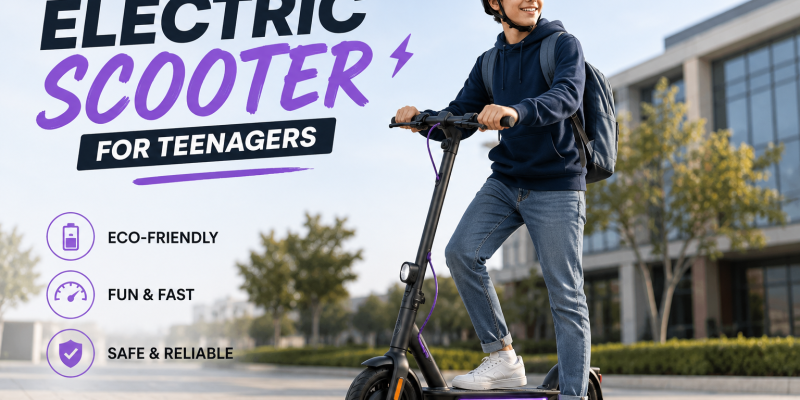
That distinction matters in 2026 because electric scooters have become faster and more sophisticated while injury and battery-fire concerns remain real. The American Academy of Pediatrics recommends that children under 16 not operate or ride motorized or electric scooters. For older teens who are legally permitted to ride, a lower-speed model with verified electrical safety certification, predictable braking, visible lighting, and a well-fitted helmet is a much better choice than a high-performance superscooter.
| The most important buying rule
Do not shop by maximum speed first. Start with the rider’s age and local law, then verify UL 2272 certification, braking, lighting, tire condition, weight capacity, and a realistic speed limit. A scooter that is easy to control at 15 to 20 mph is generally a more sensible starting point for an older teenager than an adult model capable of 30 mph or more. |
Key Takeaways
- The American Academy of Pediatrics recommends that children under age 16 not operate or ride motorized or electric scooters.
- For teens age 16 or 17, legality varies by state and city. Check local rules for minimum age, helmet requirements, permitted roads or bike lanes, and maximum speed before buying.
- Look for a scooter whose electrical system is independently certified to UL 2272 or an equivalent applicable safety standard by a recognized testing laboratory.
- Avoid choosing a scooter simply because it is fast. For a new teenage rider, a controlled top speed around 15 to 20 mph is a more reasonable starting point where legal.
- A strong braking system, front and rear lights, reflectors, good tires, a stable deck, and predictable throttle response matter more than app features or flashy lighting.
- CPSC guidance says riders should use the supplied charger, be present while charging, never charge while sleeping, and stop using damaged or modified battery packs.
- A properly fitted helmet is essential. CPSC’s January 2026 helmet guide says a bicycle helmet may be appropriate for powered scooters used below 20 mph in a bicycle-like manner, while scooters capable of sustained speeds of at least 20 mph may call for motorcycle-type protection.
- Do not allow passengers, phone use, earbuds, stunt riding, or riding under the influence. These behaviors reduce the rider’s ability to react to cars, pedestrians, potholes, and sudden obstacles.
First Question: Is the Teen Old Enough to Ride an Electric Scooter?
Age should be the first filter because physical coordination is only part of the problem. Riding an electric scooter also requires traffic judgment, hazard recognition, braking discipline, and the ability to resist peer pressure to ride faster or take unnecessary risks.
The American Academy of Pediatrics guidance on e-scooters recommends that children under 16, who are generally too young to have a driver’s license, should not operate or ride motorized or electric scooters.
| Age | Practical 2026 Guidance | Buying Approach |
| Under 16 | AAP recommends no motorized or e-scooter riding | Choose a non-motorized scooter or bicycle instead |
| 16 to 17 | Only where state and local law allow and the teen is mature enough | Favor controlled speed, certified battery system, strong brakes, lights, helmet |
| 18+ | Adult rules apply, but local laws still vary | Match speed and performance to experience and route |
A manufacturer’s minimum-age label does not override medical guidance or local law. Some scooters are advertised for younger riders because they are physically smaller or slower, but parents should still consider the AAP recommendation and the rules where the scooter will actually be used.
How Fast Should an Electric Scooter for a Teenager Go?
For a beginner, maximum speed should be treated as a limit to manage rather than a feature to maximize. Car and Driver’s July 2026 electric-scooter testing shows how wide the market has become: common commuter models in its test reached about 14 to 21 mph, while performance scooters reached 37, 45, and more than 50 mph.
Those high-performance models are designed for experienced adult riders, not as first scooters for teenagers. At higher speeds, stopping distance grows, falls become more severe, small wheels react more dramatically to potholes, and the consequences of a collision with a vehicle or curb increase quickly.
| Top-Speed Range | Teen Suitability | Why |
| 10 to 15 mph | Conservative | Easier to learn throttle and braking control |
| 15 to 20 mph | Reasonable for many older teens where legal | Enough speed for short trips without adult-superscooter performance |
| 20 to 30 mph | Higher risk | More protective gear, skill, road awareness, and legal scrutiny needed |
| 30+ mph | Not a sensible starter scooter for a teenager | Crash energy and stopping demands rise sharply |
| Parent-control feature worth paying for
If a scooter app or onboard menu allows the owner to set and lock a lower speed mode, that can be more valuable than a higher advertised maximum speed. The setting should not be easy for the rider to bypass without the account password. |
What Does UL 2272 Mean, and Why Should Parents Care?
An electric scooter contains a high-energy lithium-ion battery, charger, motor controller, wiring, and battery-management electronics. The fire-safety question is therefore just as important as the riding question.
UL Solutions explains that UL 2272 certification for personal e-mobility devices evaluates the electrical drivetrain, battery system, and charger-system combination for personal e-mobility products such as electric scooters.
Certification does not mean a rider cannot crash or lose control. UL specifically notes that the standard addresses electrical and fire safety, not the rider’s ability to operate the scooter. That is why a family should look for both electrical certification and good mechanical safety features.
Do not rely only on a logo printed on a product page. In May 2026, UL Solutions warned that several electric scooter models were displaying unauthorized UL marks even though they had not been evaluated to the appropriate safety standards. When possible, verify the certification through the manufacturer and the testing organization’s certification database.
What Brakes Should a Teen Scooter Have?
Braking performance is one of the most important differences between scooters. A strong motor can make a scooter feel impressive during a 30-second demo, but the braking system determines how much room the rider needs when a car turns, a pedestrian steps out, or a pothole appears.
- Prefer a scooter with a clear mechanical braking system such as a drum or disc brake, ideally supported by electronic regenerative braking.
- Avoid relying only on regenerative braking for an inexperienced teen if a better-braked alternative is available.
- Make sure the brake lever is comfortable for the rider’s hand size and does not require excessive force.
- Test low-speed emergency braking in a closed area before the scooter is used near traffic.
- Recheck brake adjustment, tire pressure, and fasteners regularly because stopping performance can change as components wear.
Car and Driver’s 2026 testing found meaningful differences in stopping distance even from only 10 mph. That reinforces why a scooter should be judged on braking and control, not just range or maximum speed.
What Tire and Suspension Setup Is Best for Teenagers?
Small scooter wheels are sensitive to cracks, gravel, wet leaves, potholes, and sharp pavement edges. Larger pneumatic tires and some suspension generally provide more control on imperfect surfaces than tiny solid wheels with no suspension.
| Feature | Why It Helps | Tradeoff |
| Pneumatic tires | Better grip and bump absorption | Can puncture and need pressure checks |
| Solid tires | No flats | Harsher ride and less bump compliance |
| Front suspension | Reduces handlebar shock | Adds weight and cost |
| Front + rear suspension | Best comfort on rough paths | Usually heavier |
| Wide deck | More stable foot placement | Less portable |
| Low deck height | Easier to step on and control | May reduce ground clearance |
How Much Range Does a Teenager Actually Need?
Marketing range is often measured under favorable conditions with a light rider, moderate speed, flat terrain, warm temperatures, and a new battery. Real-world range can be lower when the rider is heavier, the route has hills, the weather is cold, tires are underinflated, or the scooter is ridden at maximum speed.
For school, sports practice, a friend’s house, or a neighborhood errand, a teenager often needs reliability more than a 40-mile headline figure. A useful buying rule is to estimate the longest realistic round trip, then choose enough battery capacity to complete that distance with a large reserve.
- For a 3-mile round trip, do not buy a scooter that can only barely claim 3 to 5 miles.
- For a 6-mile round trip, look for substantially more than 6 miles of realistic range.
- Cold-weather families should expect reduced range during winter.
- Heavier batteries increase scooter weight, making stairs, buses, trunks, and school storage more difficult.
How Heavy Is Too Heavy for a Teen Scooter?
Weight matters because a scooter is not always ridden. It may need to be carried up apartment stairs, loaded into a car, lifted over a curb, stored in a classroom-approved location, or moved after the battery is depleted.
Car and Driver’s 2026 tests ranged from portable scooters around 27 pounds to high-performance machines above 100 pounds. For a teenager, a 25- to 45-pound scooter is far easier to manage than an 80- or 100-pound model, assuming the lighter scooter still has adequate brakes, tires, and structural quality.
Also check the manufacturer’s rider-weight limit. A scooter should have comfortable capacity above the teen’s current body weight plus clothing and a backpack. Operating near or beyond the rated limit can reduce range, acceleration, braking effectiveness, and component life.
Which Lights and Visibility Features Are Worth Paying For?
Visibility is not optional if the scooter may be used around roads, driveways, parking lots, or low-light conditions. A small rider on a narrow scooter can be difficult for drivers to notice.
- A forward-facing white headlight.
- A rear red taillight that brightens or signals during braking when possible.
- Side reflectors or side lighting.
- Turn signals that are visible from both the front and rear.
- Reflective clothing, backpack panels, or ankle bands for low-light riding.
Even with good lights, night riding adds risk. Families may choose to make daylight-only riding a house rule for a new rider, even when local law permits nighttime use.
What Helmet Should a Teen Wear on an Electric Scooter?
Helmet choice should match speed and how the scooter is used. CPSC’s January 2026 helmet guidance distinguishes between kick-scooter-type riding and powered scooters capable of sustained higher speeds.
The CPSC Which Helmet for Which Activity guide says a bicycle helmet may be appropriate for a powered scooter traveling below 20 mph when it is used in the same manner as a bicycle or kick scooter. For powered scooters capable of maintained speeds of at least 20 mph and likely to interact more with motor vehicles, CPSC points toward motorcycle-type helmet protection.
Regardless of type, fit matters. The helmet should sit level, remain secure when the rider shakes their head, and use the chin strap every ride. Replace a helmet after a significant impact or when the manufacturer recommends replacement.
- Closed-toe shoes should be standard.
- Knee and elbow protection can reduce abrasions and impact injuries, especially while learning.
- Gloves improve grip and protect hands during a fall.
- Bright or reflective clothing improves visibility.
How Should an Electric Scooter Be Charged Safely?
Battery safety continues after purchase. A certified scooter can still be damaged by the wrong charger, water intrusion, impact, improper repairs, or a replacement battery that was never designed for the vehicle.
CPSC’s current micromobility charging guidance tells consumers to be present during charging, never charge while sleeping, use the supplied charger, use only approved replacement battery packs, follow manufacturer charging instructions, and unplug the device when charging is complete.
- Charge on a hard, dry surface away from exits and combustible clutter.
- Do not charge under a bed, sofa, pile of clothes, or other material that can trap heat.
- Stop using a battery that becomes unusually hot, swells, leaks, smells strange, smokes, or makes abnormal noises.
- Do not use a generic or ‘universal’ charger unless the scooter manufacturer specifically approves it.
- Do not let an unqualified repair shop rebuild the pack with used or repurposed cells.
- Do not put damaged lithium-ion batteries in household trash or ordinary recycling.
What U.S. Laws Should Parents Check Before Buying?
There is no single U.S. rule that tells every teenager where and how an electric scooter may be ridden. States and cities can set different minimum ages, helmet rules, maximum speeds, sidewalk restrictions, bike-lane rules, licensing requirements, and parking regulations.
That means a scooter that is legal for a 16-year-old on a bike lane in one city may be restricted on the sidewalk or require a different minimum age somewhere else. Rental-scooter rules can also differ from rules for privately owned scooters.
Before paying, search the state vehicle code and the city or county transportation page for ‘motorized scooter’ or ‘electric scooter.’ If the rules are unclear, contact the local transportation department or police non-emergency line rather than relying on an online retailer’s age claim.
| Do this before ordering
Confirm four things for the exact place the teen will ride: minimum rider age, helmet requirement, legal riding locations, and maximum permitted speed. A scooter is a poor purchase if the teen cannot legally use it on the route it was bought for. |
What Features Are Nice but Not Essential?
Electric scooters now come with smartphone apps, RGB lighting, electronic locks, cruise control, ride analytics, traction control, and elaborate displays. Some are useful, but none should outweigh brakes, tires, visibility, electrical certification, and predictable controls.
| Feature | Useful? | Teen Buying View |
| App speed limiter | Very useful | Good if parent-controlled and difficult to bypass |
| GPS tracking | Useful | Helpful for theft recovery and location awareness |
| Cruise control | Mixed | Can surprise inexperienced riders if operation is unclear |
| RGB lighting | Mostly cosmetic | Fine if it does not replace real visibility lighting |
| Phone mount | Mixed | Navigation can help, but phone interaction while moving should be prohibited |
| High-power dual motors | Usually unnecessary | Adds speed, weight, cost, and risk |
A Parent’s 12-Point Pre-Purchase Checklist
- Confirm the rider is old enough under both family rules and local law.
- Verify the electrical system’s UL 2272 certification rather than relying on an unverified logo.
- Choose a realistic top speed, ideally with a lockable lower-speed mode for a new rider.
- Prefer strong mechanical braking with predictable lever feel.
- Look for a headlight, taillight, brake indication, and reflectors or turn signals.
- Choose tires and suspension that match the actual road surface.
- Make sure the deck and handlebar height fit the teen comfortably.
- Check the rider-weight limit with room for a backpack and growth.
- Make sure the scooter is light enough for the teen to lift when needed.
- Calculate real round-trip range rather than relying on the maximum marketing claim.
- Check CPSC recalls and safety warnings for the exact brand and model.
- Buy the helmet and other protective gear at the same time as the scooter, not later.
What Should a Teen Practice Before Riding Near Traffic?
The first rides should happen in a large empty parking lot, closed paved area, or another legal space without moving cars. The teen should become comfortable with low-speed balance before using the highest permitted speed mode.
- Smooth starting without sudden throttle input.
- Straight-line braking from progressively higher practice speeds.
- Emergency braking without locking or skidding the wheels.
- Looking over the shoulder without drifting sideways.
- Riding over small surface changes at reduced speed.
- Hand signals or electronic turn signals where appropriate.
- Getting off and walking the scooter through crowded pedestrian areas.
A useful house rule is that both hands stay on the handlebars whenever the scooter is moving. No texting, filming, eating, carrying a second rider, or wearing earbuds that block surrounding traffic sounds.
Frequently Asked Questions
What is a good electric scooter speed for a teenager?
For an older teen who is legally allowed to ride, roughly 15 to 20 mph is a more reasonable starting range than a high-performance scooter capable of 30 mph or more. The right limit depends on local law, experience, route, protective gear, and the scooter’s braking and tire setup.
Can a 13-year-old ride an electric scooter?
The American Academy of Pediatrics recommends that children under 16 not operate or ride motorized or electric scooters. Local laws may also impose minimum ages, so families should check state and city rules.
Can a 16-year-old ride an electric scooter?
Possibly, depending on state and local law. A 16-year-old should still start with a controlled-speed scooter, use a helmet, practice away from traffic, and follow local rules for bike lanes, roads, sidewalks, and nighttime riding.
What certification should an electric scooter have?
For the electrical system, look for independent certification to UL 2272 or another applicable recognized safety standard. UL 2272 evaluates the scooter’s battery, charger, electrical drivetrain, and related electrical fire-safety systems.
Is 25 mph too fast for a teenage beginner?
For most new teenage riders, 25 mph is faster than necessary and increases the consequences of mistakes. A lower speed limit gives the rider more time to recognize hazards, brake, and learn scooter handling.
Should a teenager wear a bicycle or motorcycle helmet?
CPSC’s 2026 helmet guide says a bicycle helmet may be appropriate for powered scooter use below 20 mph when used similarly to a bicycle or kick scooter. For scooters capable of sustained speeds of at least 20 mph with more motor-vehicle interaction, CPSC points toward motorcycle-type helmet protection.
Can you charge an electric scooter overnight?
CPSC advises consumers to be present while charging micromobility products and never charge while sleeping. Use the supplied charger, follow the manufacturer’s instructions, and unplug the scooter when charging is complete.
What is the best electric scooter for a teenager in 2026?
There is no single best model for every teenager. The best choice is one that is legal for the rider’s age, certified for electrical safety, limited to an appropriate speed, equipped with reliable brakes and lights, stable on the surfaces the teen will use, and light enough to control and carry. For a new rider, those qualities matter more than acceleration, maximum range, or high motor wattage.
Final Verdict: A Teen Scooter Should Be Easy to Control, Not Impressive on Paper
The electric scooter market rewards big numbers. More watts, more range, more speed, and more drive modes look good in product listings. For a teenager, those numbers can distract from the features that actually reduce risk.
A good electric scooter for an older teen starts with legality and maturity. It should have verified electrical certification, predictable brakes, visible lighting, appropriate tires, a manageable weight, enough real-world range for the route, and a top speed the rider can safely control. A helmet and clear family riding rules should be part of the purchase from day one.
Parents should be especially cautious with adult superscooters. Car and Driver’s 2026 testing includes models capable of more than 35, 45, and even 50 mph. Those machines may be exciting for experienced adult enthusiasts, but they are not sensible first scooters for teenagers.
For riders under 16, the AAP recommendation is clear: choose a non-motorized alternative instead. For older teens, the safest purchase is usually the scooter that does less, more predictably, with better safety hardware.
Research note: This article was updated for U.S. readers using information available in August 2026. Safety recommendations were checked against the American Academy of Pediatrics, U.S. Consumer Product Safety Commission, UL Solutions, and current 2026 electric-scooter testing from the supplied Car and Driver reference. State and local scooter laws, manufacturer age limits, product availability, recalls, and certification status can change.





Comments