Tag: BMW iX5

  • BMW X5 Redesign: What Changes for the 2027 Model?

    BMW X5 Redesign: What Changes for the 2027 Model?

    A U.S. guide to the fifth-generation X5 design, interior technology, gas, plug-in hybrid and electric powertrains, pricing, and launch schedule

    The BMW X5 redesign arrives for the 2027 model year as the SUV’s fifth generation. BMW has now moved beyond the prototype stage and revealed the production vehicle, confirming a sharper Neue Klasse-inspired design, a completely reworked digital cabin, upgraded gas and plug-in hybrid models, and the first fully electric iX5.

    The redesign is significant because BMW is not forcing every buyer into one powertrain. The U.S. lineup begins with rear-wheel-drive and all-wheel-drive inline-six models, adds an updated X5 50e plug-in hybrid, and introduces the 570-hp iX5 60 xDrive with a preliminary range estimate of up to 435 miles. A V-8 M Performance version will follow later in 2027, while a hydrogen fuel-cell X5 is planned farther ahead.

    Key Takeaways

    The 2027 X5 is a full fifth-generation redesign, not a minor refresh.

    U.S. pricing starts at $71,250 for the rear-wheel-drive X5 40 after the $1,450 destination charge.

    The X5 40 and X5 40 xDrive use a 394-hp turbocharged inline-six with 48-volt mild-hybrid assistance.

    The X5 50e plug-in hybrid retains 483 horsepower but increases its preliminary electric-range estimate to 44 miles.

    The first iX5 uses a 144-kWh usable battery, 570 horsepower, a preliminary 435-mile range estimate, and charging capability of up to 460 kW.

    BMW Panoramic Vision, a 17.9-inch central display, Operating System X, and an optional passenger screen reshape the cabin experience.

    When Will the Redesigned BMW X5 Go on Sale?

    BMW will stagger the U.S. launch rather than release every version at once. The X5 40 xDrive is scheduled to reach the market in October 2026. The rear-wheel-drive X5 40, X5 50e xDrive plug-in hybrid, and iX5 60 xDrive are scheduled to follow during the first quarter of 2027.

    Additional models, including a V-8 M Performance version, are expected later in 2027. The hydrogen fuel-cell model will arrive after the core lineup and should be viewed as a specialized future addition rather than a mainstream launch trim.

    Model U.S. Launch Timing Starting Price With Destination
    X5 40 xDrive October 2026 $73,550
    X5 40 First quarter of 2027 $71,250
    X5 50e xDrive First quarter of 2027 $78,950
    iX5 60 xDrive First quarter of 2027 $81,250
    V-8 M Performance model Later in 2027 Not announced
    Hydrogen fuel-cell X5 Future model Not announced

    The confirmed pricing and rollout schedule come from BMW’s official 2027 X5 and iX5 announcement. Dealer transaction prices may be higher after options, taxes, registration, documentation fees, and any market adjustments.

    How Different Does the Redesigned X5 Look?

    The new X5 keeps the upright stance, long hood, wide body, and two-row luxury-SUV proportions that have defined the model since 1999. The redesign changes the details more dramatically than the basic silhouette.

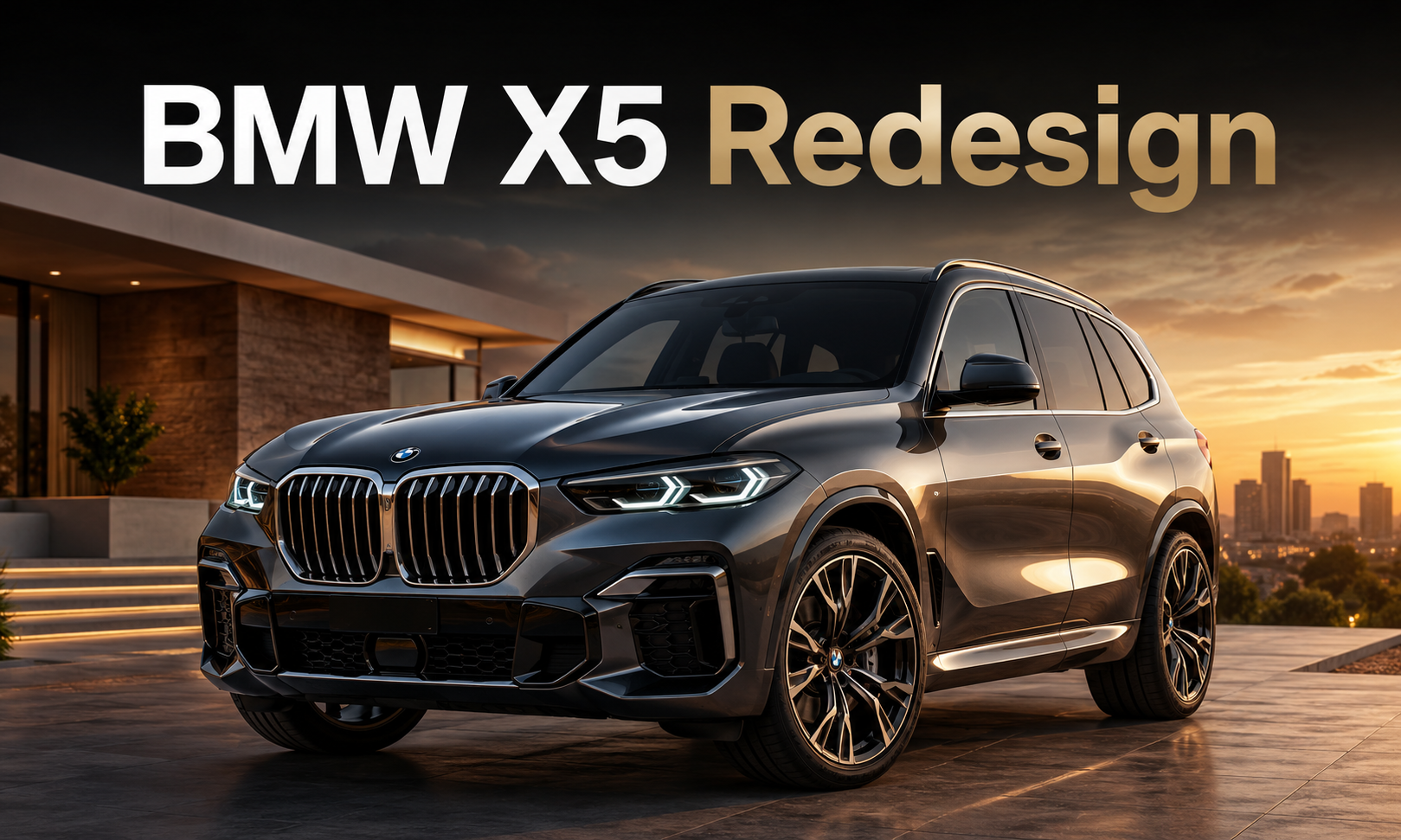
    The front end is taller and cleaner, with vertically arranged illuminated kidney grilles and new double-X daytime-running-light graphics. Combustion models use horizontal lower air intakes, while the electric iX5 has a smoother front apron. The redesign also introduces flush BMW Winglet door controls integrated into the B- and C-pillars.

    At the rear, slimmer lamps stretch across much of the vehicle’s width and repeat the double-X lighting theme. BMW will offer 21-inch wheels as standard, with 22-inch and newly available 23-inch designs. Buyers will also be able to choose from M Sport and M Sport Professional appearance packages.

    Redesign Area 2027 Change Buyer Impact
    Front fascia Taller nose, illuminated vertical grille, double-X lighting More distinctive but potentially polarizing appearance
    Door controls Winglet handles integrated into the pillars Cleaner aerodynamics and optional powered doors
    Rear design Slimmer full-width visual theme Makes the X5 appear wider and more modern
    Wheel choices 21-inch standard, up to 23 inches available More visual impact, but larger tires can cost more
    Body proportions Longer wheelbase, wider stance, lower roofline A sportier profile with continued two-row utility

    What Is New Inside the 2027 BMW X5?

    The cabin receives one of the largest changes in the redesign. BMW Panoramic Vision projects driving and customizable information across the lower edge of the windshield. A separate 3D head-up display places navigation and assistance information directly in the driver’s line of sight.

    The primary touch interface is a 17.9-inch free-cut central display running BMW Operating System X. Users can move widgets between the central screen and the Panoramic Vision area, while steering-wheel controls illuminate only when their functions are available.

    An optional 14.6-inch passenger display supports video, gaming, music, and other entertainment. A camera-based distraction safeguard can darken the passenger screen if the driver looks toward it while the vehicle is moving. BMW also adds an AI-enhanced voice assistant, more extensive app integration, over-the-air update capability, and up to seven individual driver profiles.

    Technology What It Does
    BMW Panoramic Vision Projects information across the lower windshield from the driver’s side toward the passenger side
    17.9-inch Central Display Controls infotainment, settings, navigation, climate menus, and customizable widgets
    BMW Operating System X Supports apps, updates, personalization, digital services, and voice interaction
    3D Head-Up Display Places selected driving and navigation information closer to the driver’s sightline
    Optional Passenger Screen Provides entertainment and selected controls for the front passenger
    Alexa+ enhanced assistant Allows more natural voice requests and broader cloud-based responses

    What Engines and Powertrains Does the New X5 Offer?

    The redesign expands the X5 from a traditional gas and plug-in hybrid SUV into a true multi-powertrain family. Each version targets a different use case rather than simply adding more power.

    Model Powertrain Output Estimated Performance or Range
    X5 40 / 40 xDrive 3.0-liter turbo inline-six with 48V system 394 hp, 428 lb-ft 0 to 60 mph in 5.1 seconds
    X5 50e xDrive Inline-six plug-in hybrid with 26.5-kWh usable battery 483 hp, 516 lb-ft 0 to 60 mph in 4.6 seconds, up to 44 electric miles
    iX5 60 xDrive Dual-motor electric AWD with 144-kWh usable battery 570 hp, 593 lb-ft 0 to 60 mph in 4.4 seconds, up to 435 miles
    V-8 M Performance Electrified V-8 expected Not announced Arrives later in 2027
    Hydrogen X5 Hydrogen fuel-cell electric drive Not announced Future production model

    How Much Better Is the New X5 40?

    The core X5 40 remains the most traditional choice. Its updated 3.0-liter B58 inline-six produces 394 horsepower and 428 lb-ft of torque, increases of 19 horsepower and 45 lb-ft over the 2026 X5 40i. A 48-volt motor inside the eight-speed automatic can provide up to 17 horsepower and 148 lb-ft of temporary electric assistance.

    BMW also revised the turbocharger, combustion cycle, injection system, valve timing, and energy recuperation. The goal is stronger response and better efficiency without replacing the smooth inline-six character that has helped make the X5 popular.

    The rear-wheel-drive X5 40 offers the lowest starting price. The X5 40 xDrive adds all-wheel drive for drivers who face snow, rain, steep roads, or frequent low-traction conditions. Most U.S. inventory is likely to favor xDrive, but rear-wheel drive may appeal to warm-climate buyers who want to save money and weight.

    What Changes on the X5 50e Plug-In Hybrid?

    The X5 50e continues with 483 horsepower and 516 lb-ft of system torque, so the redesign does not chase a large headline power increase. Its main improvement is electric usability. BMW estimates up to 44 miles of electric driving, about 15 percent more than the previous generation’s official figure.

    The plug-in hybrid can make sense for drivers who charge at home and complete many daily trips within its electric range. It also retains a gasoline engine for long-distance travel, avoiding the charging dependence of a full EV. Buyers who rarely plug in will carry the cost and weight of the battery without receiving its full benefit.

    Does the Electric iX5 Change the X5 Lineup?

    Yes. The iX5 is not merely another trim. It becomes the technology flagship of the redesigned family and effectively replaces the separate BMW iX in the U.S. market.

    Its dual motors produce 570 horsepower and 593 lb-ft of torque. BMW estimates a 4.4-second 0-to-60-mph time and up to 435 miles of range using preliminary internal testing based on EPA procedures. Final EPA certification may differ.

    The 144-kWh usable battery operates on an 800-volt architecture and supports DC charging at up to 460 kW. BMW estimates a 10-to-80-percent charge in 22 minutes under ideal conditions and about 170 miles of added range in 10 minutes. A standard NACS port improves access to compatible U.S. fast-charging infrastructure.

    The large battery should reduce range anxiety, but it also adds weight and may increase tire wear, insurance cost, and purchase complexity. Home-charging access remains the biggest practical question for prospective iX5 buyers.

    Will the New X5 Still Drive Like a BMW?

    Early prototype impressions suggest BMW has tuned the redesigned X5 more toward luxury without abandoning precise steering and body control. The body is stiffer, the wheelbase is longer, and the suspension geometry has been revised to accommodate major weight differences between gas, plug-in hybrid, and electric versions.

    Adaptive dampers are standard. Depending on model and package, buyers can add air suspension, active roll stabilization, and rear-wheel steering. Rear-wheel steering can reduce the turning circle by about 2.5 feet at low speeds and increase stability during faster lane changes.

    Optional active anti-roll hardware can reduce head toss on uneven roads and body lean in corners. These systems improve comfort and agility, but they also add mechanical and electronic complexity beyond the standard suspension.

    What Driver Assistance Does the Redesigned X5 Add?

    Driving Assistant Plus is standard and can help control speed, following distance, and lane position. Optional Highway Assistant allows hands-free driving on suitable limited-access highways at speeds up to 85 mph, although the driver must remain attentive and ready to intervene.

    Parking Assistant Plus adds a revised surround-view interface and semi-automated parking. The system can record and repeat familiar maneuvers over distances of up to 600 feet. Parking Assistant Professional adds smartphone-based remote control for selected maneuvers.

    These features can reduce workload, but they do not make the X5 self-driving. Weather, road markings, construction zones, sensor blockage, and system limitations can require immediate driver control.

    How Does 2027 Pricing Compare With the 2026 X5?

    Model 2026 Starting MSRP 2027 Price With Destination Approximate Change
    Rear-wheel-drive six-cylinder $68,300 before destination $71,250 Moderate increase after accounting for destination
    AWD six-cylinder $70,600 before destination $73,550 Moderate increase after accounting for destination
    Plug-in hybrid AWD $76,000 before destination $78,950 Moderate increase after accounting for destination
    Electric X5 Not offered $81,250 New model

    For context, the outgoing 2026 BMW X5 lineup starts at $68,300 for the sDrive40i, $70,600 for the xDrive40i, and $76,000 for the xDrive50e before destination. Buyers should compare actual dealer discounts on the outgoing model with the redesigned X5’s new equipment and stronger resale appeal.

    Should You Wait for the Redesigned X5?

    Wait for the 2027 X5 If You… Consider a 2026 X5 If You…
    Want the new Panoramic iDrive cabin Prefer the familiar curved-display interior
    Want the first electric iX5 Do not need a battery-electric model
    Value the upgraded six-cylinder and longer PHEV range Find a substantial dealer discount or lease offer
    Plan to keep the SUV for several years Want a more established model-year reliability record
    Prefer the newest exterior design and driver-assistance systems Want to avoid first-year redesign uncertainty

    Waiting is most sensible for buyers attracted to the iX5, the revised digital interior, or the improved plug-in hybrid range. A current X5 may be the better value if dealers discount remaining inventory and the buyer prefers its more conventional interface.

    What Should Buyers Check Before Ordering?

    1. Confirm the exact launch timing for the preferred powertrain and trim.
    2. Compare the base price with destination, packages, paint, wheels, taxes, and dealer fees.
    3. Test BMW Panoramic Vision and the touch-based climate controls before purchasing.
    4. Price insurance and replacement tires, especially with 22-inch or 23-inch wheels.
    5. For the X5 50e, confirm home-charging access and expected daily electric use.
    6. For the iX5, evaluate home charging, road-trip routes, battery warranty, and winter range needs.
    7. Compare discounted 2026 inventory with the final out-the-door price of the redesigned model.

    Frequently Asked Questions

    Is the BMW X5 redesigned for 2027?

    Yes. The 2027 X5 begins the fifth generation with new exterior styling, a new digital interior, revised chassis technology, and an expanded powertrain lineup.

    How much does the 2027 BMW X5 cost?

    The X5 40 starts at $71,250 with destination, while the X5 40 xDrive starts at $73,550. The X5 50e starts at $78,950 and the iX5 at $81,250.

    Does the redesigned X5 have a V-8?

    A V-8 M Performance model is scheduled for later in 2027. BMW has not yet announced its U.S. price or final specifications.

    Is the 2027 X5 fully electric?

    The lineup includes gas, plug-in hybrid, and electric versions. The iX5 60 xDrive is the first fully electric X5.

    What is the expected range of the iX5?

    BMW estimates up to 435 miles using preliminary internal testing based on EPA procedures. Final EPA certification may differ.

    How far can the X5 50e drive on electricity?

    BMW estimates up to 44 miles of electric range, subject to final certification and real-world conditions.

    When can buyers purchase the redesigned X5?

    The X5 40 xDrive launches in October 2026. The X5 40, X5 50e, and iX5 are scheduled for the first quarter of 2027.

    The Bottom Line

    The 2027 BMW X5 redesign changes nearly every part of the ownership experience while preserving the model’s basic two-row luxury-SUV formula. The gas model gains power, the plug-in hybrid gains useful electric range, and the iX5 brings long-range electric driving and extremely fast charging to the lineup for the first time.

    The strongest reason to wait is technology. Panoramic iDrive, the redesigned cabin, expanded driver assistance, and the electric iX5 make the 2027 model feel like a new generation rather than a cosmetic update. The strongest reason to buy a 2026 X5 is value, particularly if outgoing inventory receives meaningful discounts before the redesigned model becomes widely available.