
 By
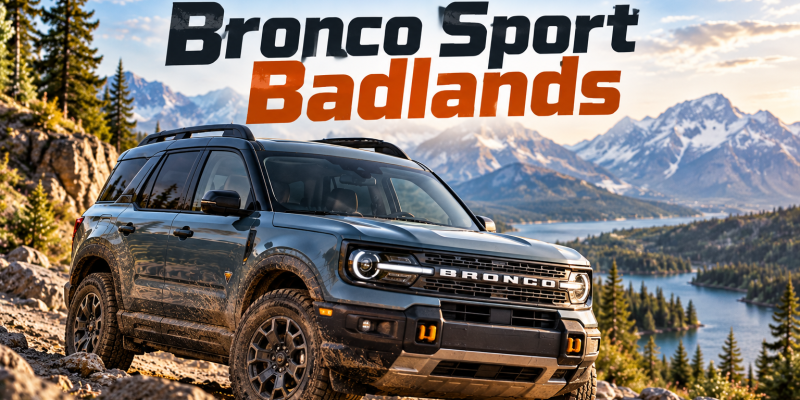
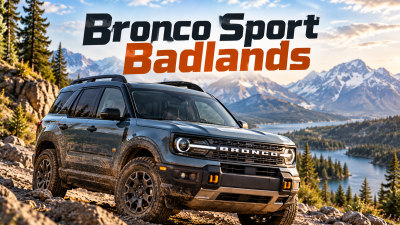
The Bronco Sport Badlands is the most capable version of Ford’s compact Bronco Sport, aimed at drivers who want genuine trail hardware without moving up to the larger body-on-frame Bronco. For 2026, the Badlands keeps its 250-hp 2.0-liter EcoBoost engine, advanced 4×4 system with a twin-clutch rear drive unit, HOSS 2.0 suspension, all-terrain tires, and seven G.O.A.T. Modes. An available Sasquatch Badlands package pushes the formula further with tougher suspension and tire hardware.
Car and Driver’s 2026 Ford Bronco Sport review says the 2.0-liter Badlands is the powertrain choice it prefers and describes the Sasquatch-equipped Badlands as the most rugged off-roader in the Bronco Sport lineup. Ford’s current specifications back up that positioning with more power, more towing capacity, and more off-road equipment than the lower trims.
2026 Bronco Sport Badlands Key Specifications
| Specification | 2026 Bronco Sport Badlands |
| Engine | 2.0L turbocharged EcoBoost inline-four |
| Horsepower | 250 hp at 5,500 rpm |
| Torque | 280 lb-ft at 3,000 rpm |
| Transmission | 8-speed automatic with paddle shifters |
| Drivetrain | Advanced 4×4 with twin-clutch rear drive unit |
| Suspension | HOSS 2.0 standard; HOSS 3.0 available with Sasquatch |
| Tires | 225/65R17 all-terrain standard; 235/65R17 Goodyear Territory A/T available |
| EPA estimate | 21 city / 27 highway / 23 combined mpg |
| Maximum towing | 2,700 pounds when properly equipped |
| Cargo space | 29.1 cu ft behind row two; up to 60.6 cu ft behind row one |
| Seating | 5 passengers |
These figures come from Ford’s 2026 Bronco Sport Badlands specifications. Horsepower and torque ratings are based on premium fuel under Ford’s published test standard, although the engine can use regular unleaded.
What Makes the Badlands Different From Other Bronco Sport Trims?
The Badlands is not simply an appearance package. Lower trims use a 180-hp 1.5-liter turbo three-cylinder and a simpler 4×4 system. The Badlands gets the stronger 2.0-liter engine and advanced 4×4 with a twin-clutch rear drive unit.
It also gets hardware aimed specifically at trail use: HOSS 2.0 off-road suspension, steel underbody protection, a steel-plated front bumper, front recovery hooks, 17-inch wheels with all-terrain tires, Trail Control, Trail 1-Pedal Drive, and seven G.O.A.T. Modes. Rock Crawl and Rally modes are part of the Badlands terrain-management setup, giving it more specialized control than the everyday Bronco Sport trims.
How Quick Is the Bronco Sport Badlands?
The Badlands is surprisingly quick for a small off-road-oriented crossover. Car and Driver recorded a 5.9-second 0-60 mph time with the 2.0-liter engine, putting it near the front of the compact SUV segment for straight-line performance. That extra power is also useful on steep grades, loose surfaces, and highway merges where the base 1.5-liter engine can feel more strained.
An eight-speed automatic is standard, with steering-wheel paddle shifters. The Badlands is not a traditional performance SUV, but the stronger engine helps offset its off-road hardware and feels more relaxed with passengers or gear.
How Capable Is the Bronco Sport Badlands Off Road?
For a unibody compact crossover, the Badlands is unusually serious about off-road driving. The advanced 4×4 system, twin-clutch rear drive unit, all-terrain tires, bash plates, recovery hooks, and trail-specific drive modes work together to give it more traction and protection than a typical all-wheel-drive crossover.
Trail Control acts like low-speed cruise control on uneven terrain, while Trail 1-Pedal Drive reduces constant switching between accelerator and brake. The 360-degree camera with Trail View helps show rocks, ruts, and ground near the front bumper.
What Does the Sasquatch Badlands Package Add?
Ford lists an available Sasquatch Badlands package that upgrades the already capable Badlands. The package moves the suspension to HOSS 3.0 and adds BILSTEIN rear shocks, while available 235/65R17 Goodyear Territory all-terrain tires are larger and more aggressive than the standard 225/65R17 tires.
| Feature | Standard Badlands | Badlands with Sasquatch |
| Suspension | HOSS 2.0 | HOSS 3.0 |
| Rear damping | Standard off-road shocks | BILSTEIN rear shocks |
| Tire size | 225/65R17 A/T | 235/65R17 Goodyear Territory A/T |
| Advanced 4×4 | Standard | Standard |
| Twin-clutch rear drive unit | Standard | Standard |
| Best use | Mixed road and trail driving | More frequent or more demanding trail use |
The Sasquatch package makes the most sense for buyers who actually plan to use the Bronco Sport on rough trails. For drivers who spend nearly all of their time on pavement, the standard Badlands already includes the engine, drivetrain, underbody protection, and drive modes that distinguish it from the rest of the lineup.
What Is the Bronco Sport Badlands Like on the Road?
The Badlands is easier to live with daily than a traditional truck-based off-roader. Compact dimensions help parking, while independent suspension supports a more crossover-like ride.
Car and Driver found that the Sasquatch version stayed nimble on pavement but noted more road noise from its knobbier tires. That is an important tradeoff: more aggressive tires improve loose-surface grip but can add noise, cost, and rolling resistance. Buyers who only occasionally leave pavement may prefer the standard Badlands tire setup.
Fuel Economy and Driving Range
Ford rates the 2026 Badlands at 21 mpg city, 27 mpg highway, and 23 mpg combined. That is lower than the 1.5-liter Bronco Sport trims, which Ford rates at 25 city, 30 highway, and 27 combined, but the difference buys substantially more power and off-road hardware.
Aggressive tires, roof gear, towing, and trail driving can reduce real-world economy. The Badlands is the capability-focused Bronco Sport rather than the fuel-economy choice.
How Much Can the Bronco Sport Badlands Tow?
The 2026 Badlands is rated to tow up to 2,700 pounds when properly equipped, compared with 2,200 pounds for Bronco Sport models using the 1.5-liter engine. Ford includes the Class II Trailer Tow Package with Trailer Sway Control on the Badlands.
That capacity can cover a small utility trailer, lightweight watercraft, or some compact campers. Buyers should still calculate trailer weight, cargo, passengers, and tongue weight.
Interior, Cargo Space, and Daily Practicality
The Badlands seats five and uses Dark Space Gray ActiveX-trimmed seating with perforation. Heated front seats, rubberized flooring, a rubberized cargo floor, and under-seat storage help it handle muddy boots and outdoor equipment better than a purely luxury-focused crossover.
Ford lists 29.1 cubic feet of cargo space behind the rear seats for the 2.0-liter model and 60.6 cubic feet with the rear seat folded. The Sasquatch package trims maximum cargo slightly to 60.2 cubic feet. The liftgate glass can open separately, which is useful when loading smaller items without raising the entire liftgate.
Technology and Driver Assistance
The Badlands includes Ford Co-Pilot360 Assist 2.0 and a 360-degree camera with Trail View. Ford’s 2026 order guide lists front parking sensors and Reverse Brake Assist as part of the Badlands driver-assistance equipment. SYNC 4 handles infotainment, while the available Badlands Tech Package adds B&O audio, HD Radio, additional noise-reduction hardware, and connected navigation.
The technology matters off road as much as on road. Cameras can show wheel placement and obstacles, while driver assistance adds convenience during commuting and parking.
Badlands vs. Outer Banks: Which Bronco Sport Should You Buy?
The Outer Banks is the better fit for shoppers who prioritize comfort and appearance over maximum off-road capability. It can be ordered with its own Sasquatch package, but Car and Driver notes that the Badlands version retains a few advantages and remains the most rugged configuration.
The Badlands is the clear choice if you want the 250-hp engine, advanced 4×4 with twin-clutch rear drive unit, Rock Crawl and Rally modes, stronger towing capacity, and standard trail hardware. If those features will rarely be used, the lower trims are less expensive and more fuel efficient.
What Should You Check Before Buying a Bronco Sport Badlands?
- Decide whether the standard Badlands already meets your trail needs before paying for the Sasquatch package.
- Drive both standard and more aggressive tire setups to compare highway noise and ride quality.
- Confirm the exact MSRP and installed packages on the window sticker because Badlands inventory varies widely by options.
- Check payload as well as the 2,700-pound tow rating if you plan to carry passengers, camping gear, and a trailer together.
- Make sure the cargo area and rear-seat space fit your normal family or outdoor gear before focusing only on off-road hardware.
Frequently Asked Questions About the Bronco Sport Badlands
Does the Bronco Sport Badlands Have a Different Engine?
Yes. The Badlands uses a 2.0-liter turbocharged four-cylinder producing 250 hp and 280 lb-ft of torque. Lower Bronco Sport trims use a 180-hp 1.5-liter turbocharged three-cylinder.
Is the Bronco Sport Badlands AWD or 4WD?
Ford calls the Badlands system advanced 4×4. It uses a twin-clutch rear drive unit and can actively manage torque for traction. It is more sophisticated than the standard Bronco Sport 4×4 system, although the vehicle remains a unibody crossover rather than a traditional body-on-frame SUV.
Is the Sasquatch Package Worth It on the Badlands?
It is most worthwhile for buyers who regularly drive rough trails and want the upgraded HOSS 3.0 suspension, BILSTEIN rear shocks, and larger all-terrain tires. The standard Badlands is already highly capable for mixed road and trail use.
What Is the Bottom Line?
The Bronco Sport Badlands is the version to choose when capability matters more than lowest price or best fuel economy. Its 250-hp engine, advanced 4×4 system, twin-clutch rear drive unit, HOSS suspension, trail controls, underbody protection, and 2,700-pound towing rating make it meaningfully different from the rest of the Bronco Sport range.
The Sasquatch package takes capability further, but it is not mandatory. For a compact SUV that stays easy to drive daily while being better prepared for genuine trail use than most crossovers, the Badlands is the Bronco Sport to examine.





Comments